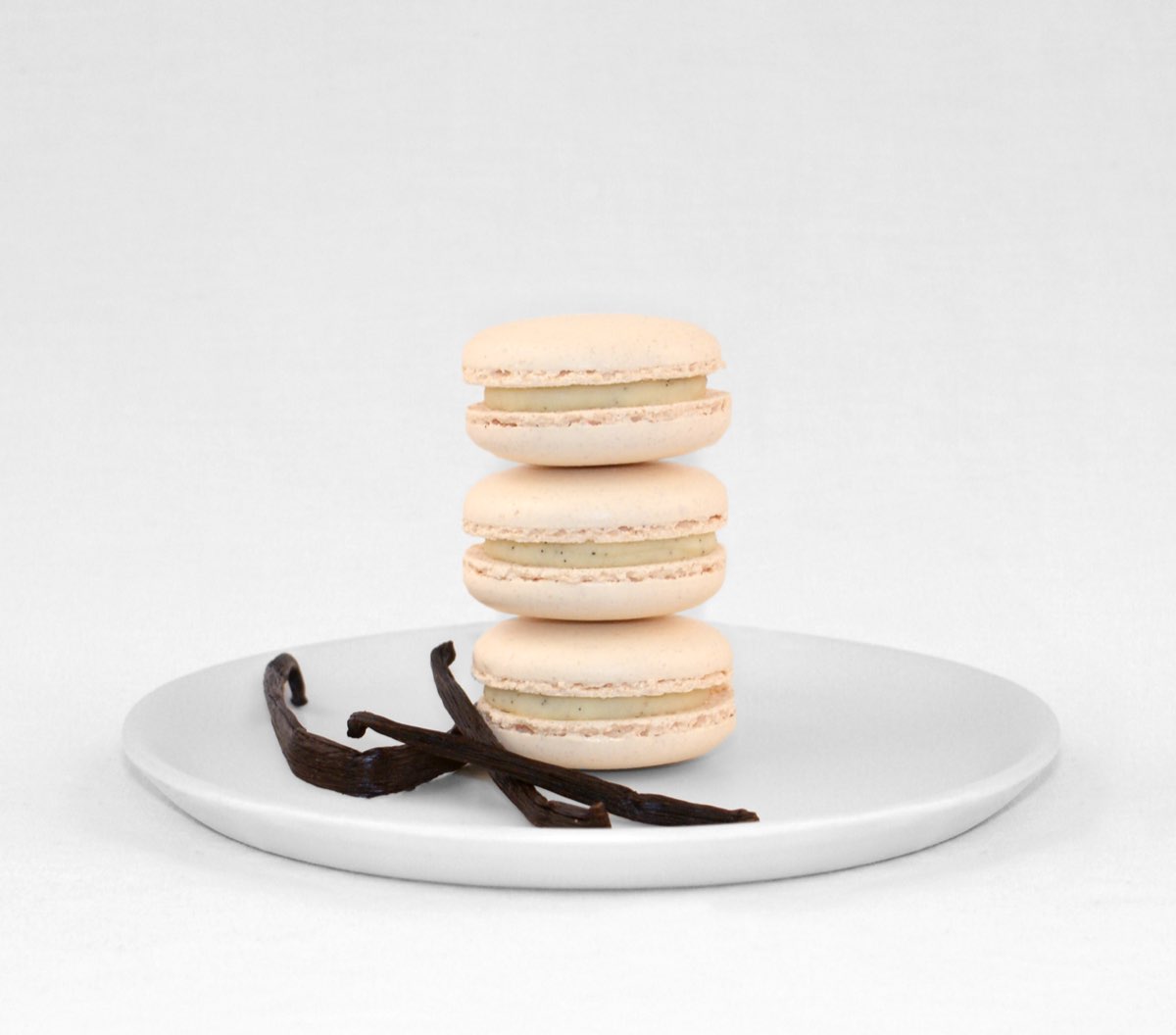
Macaron
Ingredients
- 75 g egg whites, room temperature
- 75 g granulated sugar
- 1/4 tsp cream of tartar
- 100 g confectioners' sugar
- 85 g almond flour
- gel food coloring and/or flavoring, optional
- filling of choice: ganache, buttercream, or jam
A French macaron shell is a meringue built on egg whites and sugar, lightened with finely ground almond flour and confectioners' sugar, then piped into rounds and rested until a skin forms before baking — that skin is what produces the signature ruffled 'foot' at the base. Shells are sandwiched with a filling and traditionally left to mature in the fridge for a day so the texture softens and the flavors meld.
Method
Whip egg whites with cream of tartar, adding the granulated sugar gradually, until a glossy, stiff meringue forms.
Sift confectioners' sugar and almond flour together to remove lumps.
Fold the dry mixture into the meringue in stages (macaronage) until the batter flows off the spatula in a slow, thick ribbon.
Pipe into even rounds on parchment or a silicone mat and tap the tray firmly to release air bubbles.
Rest uncovered at room temperature until the tops are dry enough to touch without sticking, 30-60 minutes.
Bake at about 150°C (300°F) for 18-20 minutes, until the shells lift cleanly off the mat.
Cool completely, then pipe filling onto half the shells and sandwich with the rest.
Refrigerate in an airtight container for 24-48 hours before serving so the shells mature.
Ingredients
- 150 g almond flour
- 150 g confectioners' sugar
- 2×55 g egg whites (110g total), aged in the fridge for a day or two, divided
- 150 g granulated sugar
- 37.5 g water
- gel food coloring, optional
- filling of choice: ganache, buttercream, or jam
Pierre Hermé, credited with turning the macaron into a global phenomenon, builds his shells on an Italian meringue — a hot sugar syrup whipped into the egg whites — rather than the simpler French meringue of plain whipped egg whites and sugar. The cooked syrup produces a firmer, more stable meringue that Hermé considers less prone to cracking or hollow shells, and he recommends 'aging' the egg whites in the fridge beforehand to help them hold air more reliably.
Method
Sift the almond flour and confectioners' sugar together and mix with the first 55g of egg whites into a thick paste; add coloring here if using.
Combine the granulated sugar and water in a small saucepan and heat to 118°C (244°F) on a candy thermometer.
When the syrup reaches about 110°C (230°F), start whipping the second 55g of egg whites to soft, foamy peaks.
Once the syrup hits 118°C, pour it in a steady stream down the side of the bowl into the whipping egg whites, avoiding the whisk; continue whipping until the meringue cools to about 50°C (122°F) and holds stiff, glossy peaks.
Fold about a third of the Italian meringue into the almond paste to loosen it, then fold in the rest in stages (the macaronage) until the batter flows in a slow, thick ribbon.
Pipe into even rounds on parchment or a silicone mat and rap the tray firmly on the counter to release air bubbles.
Rest at room temperature until a skin forms and the tops are dry to the touch, 30-45 minutes.
Bake at about 150°C (300°F) for 12-14 minutes, until the shells lift cleanly off the mat.
Cool completely, sandwich with filling, and refrigerate in an airtight container for at least 24 hours before serving.