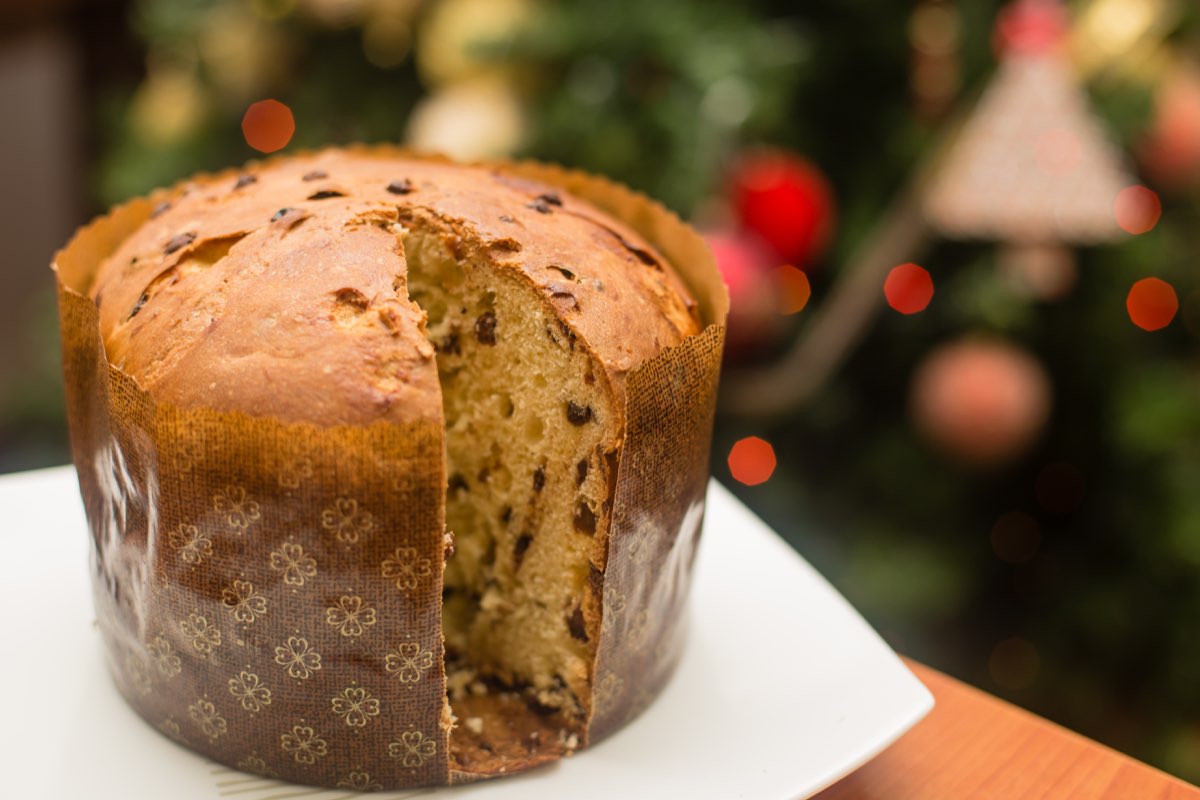
Panettone
Ingredients
- Type 00 strong flour (or bread flour)
- Active sourdough starter (lievito madre) or a well-fed sponge starter
- Butter, egg yolks, sugar
- Candied orange peel, raisins (soaked)
- Vanilla, honey, a little salt
Panettone is technically a bread, not a cake, and its tall, fluffy, dome-topped structure depends on a long, slow fermentation — traditionally using a stiff natural sourdough starter called lievito madre. The enriched dough, loaded with butter, egg yolks, candied orange, and raisins, is built up over multiple stages so the gluten can support all that richness, then baked in tall paper molds.
Method
Refresh the sourdough starter over one or more days until it is very active and doubling reliably.
Mix a first dough with flour, water, the starter, sugar and some butter and egg yolks; let it ferment until roughly tripled in volume, several hours.
Mix a second dough by combining the risen first dough with more flour, egg yolks, butter, sugar, honey, vanilla and salt, kneading until smooth and elastic.
Fold in the soaked raisins and candied orange peel.
Let the dough rise again until doubled, then shape and place into a tall paper panettone mold.
Proof until the dough nearly reaches the top of the mold, several hours.
Score the top in a cross pattern and bake at around 170-180°C (340-350°F) for 45-55 minutes.
Immediately after baking, skewer the base and hang the panettone upside down to cool, which keeps the tall structure from collapsing.
Ingredients
- Day 1: 90 g active sourdough starter, 360 g strong bread flour, 135 g water, 114 g sugar, 90 g egg yolks, 129 g butter
- Day 2: 90 g flour, 117 g egg yolks, 90 g sugar, 120 g butter (plus 18g melted), 63 g water, 7 g salt, 180 g raisins, 135 g candied orange peel, 45 g candied lemon peel
- Aromatic mix: 23 g acacia honey, half a vanilla bean (seeds only), zest of 1 lemon, zest of 1 orange
Iginio Massari, widely regarded as Italy's most influential living pastry chef and often credited as the figure who defined the modern benchmark for panettone, builds his version across two precisely timed doughs over two days. The first dough ferments for 10-12 hours at a controlled 24-25°C until it triples in volume; the second folds in more egg yolks, butter, and an aromatic mix of acacia honey, vanilla, and citrus zest before the raisins and candied peel go in. After baking, the panettone is skewered and hung upside down for about 10 hours so its tall, delicate crumb doesn't collapse under its own weight.
Method
Day 1: mix the flour, sugar, softened butter, a third of the egg yolks and the water into an elastic dough, about 18 minutes; add the sourdough starter and the remaining yolks and mix a further 5 minutes.
Place the dough in a covered container in a warm spot (24-25°C) for 10-12 hours, until it triples in volume.
Day 2: combine the risen dough with the flour and the aromatic mix; mix in the sugar with a third of the egg yolks, then the salt with another third of the yolks, then the final third of yolks with the softened butter, mixing until silky.
Work in the melted butter, then fold in the raisins and candied peels until evenly distributed.
Rest the dough 30 minutes, then divide, shape into a tight ball, and rest again 35-40 minutes before placing in a paper panettone mold.
Proof at 28-30°C for 6-7 hours, until the dough nearly reaches the top of the mold.
Score a cross on top and place a small knob of butter in the center.
Bake at 177°C (350°F) for 45-50 minutes.
Immediately skewer through the base and hang the panettone upside down to cool for about 10 hours, which keeps the tall structure from collapsing.
Let it rest for 3-4 days before slicing for the best flavor.